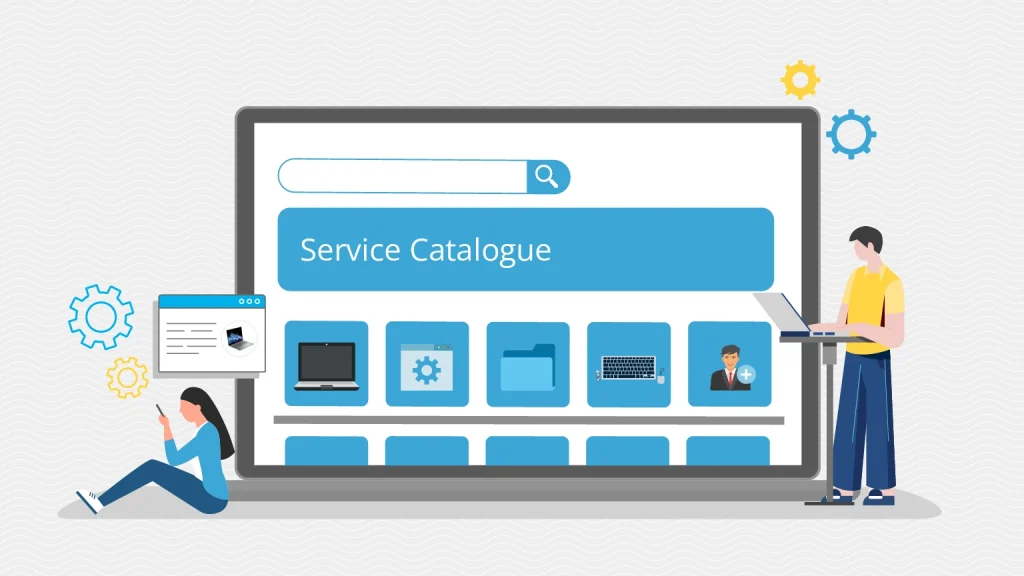
As organizations set about further renovating IT, the use of service catalog software has become an integral component in the delivery of services. As 2026 approaches, the service catalog is not just a repository of IT services; rather, it is a smart, automated, and people-focused solution bringing together workers, IT teams, and business goals.
Increasing demands for faster speed, greater transparency, and self-service have turned selecting an appropriate IT service catalog software a crucial factor in enhancing efficiency and service quality.
The blog examines the essential elements of the service catalog which matter greatly in 2026 and the relevance of these elements for IT and business teams.
What Is Service Catalog Software?
A service catalog is a system for displaying all available IT business services accessible to request via service catalog workflow. The latest technology in service catalog management incorporates request fulfillment processes, approval processes, SLAs, automation processes, and reporting processes into one system, aligned with best practices defined by the ITIL framework.
It serves as the outer layer of IT Service Management (ITSM) and enables Enterprise Service Management (ESM) by expanding the reach of services to areas outside of IT.
1. Consumer-Grade Self-Service Experience
User experience is one of the main factors of differentiation for 2026. Workers also expect the same ease of use they have using a consumer application.
Essential capabilities include:
- Clean and intuitive user interface
- Mobile-responsive self-service portal
- Role-based service visibility
- Dynamic and guided request forms
An optimal self-service experience fosters adoption, decreases tickets, and enhances the accuracy of requests.
2. AI-Powered Service Intelligence
AI has become an integral part of new generations of service catalog software. It bolsters both user experience and back-end efficiency.
Key AI-driven features include:
- Intelligent service recommendations
- Predictive auto-fill of request details
- AI-powered virtual assistants for service discovery
- Smart routing to the right fulfillment teams
These capabilities decrease resolution times and increase first-contact success rates.
3. End-to-End Workflow Automation
Manual approvals and repetitive tasks slow down service delivery. In 2026, automation is essential for scalability.
Look for service catalog platforms that offer:
- No-code or low-code workflow builders
- Multi-level and conditional approvals
- SLA-based escalation rules
- Parallel task execution
Automation ensures consistency, compliance, and faster fulfillment across services.
4. Deep ITSM and Business Tool Integrations
To deliver real value, service catalog software must integrate seamlessly with existing systems.
Critical integrations include:
- Incident, problem, and change management
- Asset management and CMDB
- Identity and access management (IAM)
- HR, finance, and procurement tools
Integrated Systems provide an ecosystem for services and end data silos.
5. Customizable and Scalable Service Design
Every organization has unique service requirements. A future-ready IT service catalog must be flexible and scalable.
Important customization features include:
- Department-specific service catalogs
- Reusable service templates
- Cost visibility and chargeback options
- Bundled services for common requests
Customization helps align IT services with business goals while maintaining governance.
6. Real-Time Analytics and Performance Insights
In 2026, data-driven decision-making is critical. Advanced analytics turn service catalogs into strategic assets.
Key metrics to track include:
- Service request volume and trends
- Fulfillment time and SLA compliance
- User satisfaction and feedback
- Cost efficiency and service utilization
These insights help IT leaders continuously optimize service delivery.
7. Enterprise-Grade Security and Compliance
With increasing regulatory requirements, security cannot be an afterthought.
Modern service catalog software should include:
- Role-based access control (RBAC)
- Complete audit logs and tracking
- Secure approval workflows
- Compliance with standards like ISO, GDPR, and SOC 2
This means strong security and compliance features that reduce risk without impacting agility.
8. Built for Enterprise Service Management (ESM)
Service catalogs in 2026 extend beyond IT to support organization-wide service delivery, enabling Enterprise Service Management (ESM) across departments.
Leading platforms enable:
- HR onboarding and employee services
- Facilities and administrative requests
- Finance and procurement workflows
- Shared services across departments
This approach maximizes the value of service catalog investments through Enterprise Service Management.
Why Service Catalog Software Is Critical in 2026
The appropriate service catalog management tool will enhance efficiency, ensure service delivery standardization, and provide better service experience within the enterprise. Services involving AI and automation are favored due to current business requirements.
Final Thoughts
Service Catalog Software in 2026: Intelligence, Automation, and Experience. Organizations that adopt scalable and integrated service catalog solutions driven by AI and automation technology have a considerable advantage.
Choosing the right IT service catalog software is not just an IT decision—it is a strategic move toward faster service delivery, improved satisfaction, and long-term business success.
Frequently Asked Questions (FAQs)
Service catalog software is a centralized platform that allows users to view, request, and track IT and business services through standardized workflows and approvals.
It enables AI-driven automation, faster service fulfillment, improved user experience, and enterprise-wide service management beyond IT.
Self-service portals, AI-powered recommendations, workflow automation, ITSM integrations, real-time analytics, security, and ESM support.
No. Modern service catalogs support Enterprise Service Management, allowing HR, finance, facilities, and other departments to deliver services efficiently.