Customer expectations are changing faster than ever. People want quick responses, personalized support, and seamless communication across multiple channels. At the same time, support teams are expected to handle increasing ticket volumes without compromising service quality. This is where Helpdesk Software powered by artificial intelligence is making a real difference. AI is no longer a futuristic concept—it is becoming an essential part of modern customer support by helping businesses automate routine tasks, improve response times, and deliver better customer experiences.
AI Is Reshaping Customer Support
Artificial intelligence is changing the way businesses interact with customers. Instead of simply logging support requests, modern platforms can understand customer intent, suggest solutions, and even automate repetitive tasks. This allows support agents to spend less time on manual work and more time resolving complex issues that require human expertise.
Rather than replacing support teams, AI is becoming a reliable assistant that improves productivity and helps organizations provide consistent service around the clock.
AI-Powered Helpdesks Are Becoming Smarter
One of the biggest trends in 2026 is the rise of the AI-Powered Helpdesk. These platforms use machine learning and natural language processing to understand customer requests, categorize tickets automatically, recommend relevant knowledge base articles, and assign issues to the right support agents.
Instead of manually reviewing every request, support teams receive intelligent recommendations that reduce response times and improve first-contact resolution. As AI continues to learn from previous interactions, its suggestions become more accurate, helping businesses deliver faster and more efficient support.
Helpdesk Automation Is Driving Efficiency
Support teams often spend a significant amount of time on repetitive administrative tasks. Assigning tickets, updating priorities, sending notifications, and escalating unresolved issues can consume valuable resources.
With Helpdesk Automation, these repetitive workflows are handled automatically. Tickets can be routed based on category, urgency, customer type, or agent expertise. Automated reminders help ensure service level commitments are met, while workflow automation reduces the risk of human error.
The result is a support operation that is faster, more consistent, and easier to manage as businesses continue to grow.
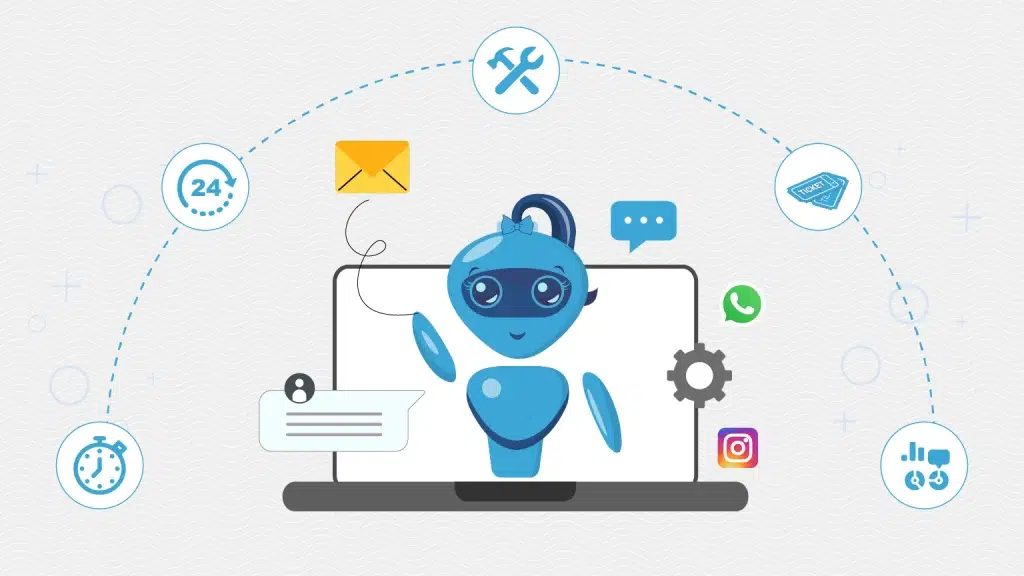
AI Chatbots Are Available 24/7
Customers increasingly expect immediate answers, regardless of the time of day. This is why the adoption of the AI Chatbot continues to grow.
Modern AI chatbots can answer common questions, guide users through troubleshooting steps, collect important information before creating a ticket, and escalate conversations to live agents whenever necessary.
Instead of replacing human support, chatbots reduce the number of repetitive inquiries, allowing agents to focus on more valuable customer interactions while ensuring users receive instant assistance whenever they need it.
Omnichannel Support Is Becoming the Standard
Today’s customers communicate through many different channels, including email, live chat, social media, messaging apps, and customer portals. Managing these conversations separately often creates confusion and delays.
An Omni channel helpdesk brings every customer interaction into one centralized platform. AI helps combine conversations from multiple channels, maintains customer history, and provides agents with complete context before they respond.
This unified approach improves collaboration, eliminates duplicate work, and creates a smoother customer experience across every communication channel.
CRM Integration Creates Personalized Support
Customer service becomes more effective when support teams understand the people they are helping. Integrating a crm ticketing system with AI enables agents to view customer history, previous conversations, purchases, and account information without switching between multiple applications.
AI can analyze this information to recommend personalized responses and identify recurring issues, helping businesses deliver more meaningful customer experiences while increasing customer satisfaction and loyalty.
Flexibility Matters More Than Ever
Businesses have different infrastructure requirements depending on their industry, security policies, and compliance needs. Some organizations prefer a cloud based help desk software solution because it offers faster deployment, automatic updates, and lower infrastructure costs.
Others require a Self hosted helpdesk to maintain complete control over sensitive business data and meet internal security requirements.
Modern support platforms are increasingly offering both deployment options, giving organizations the flexibility to choose the environment that best fits their business goals.
Open Source Continues to Gain Popularity
Cost, customization, and transparency remain major considerations for growing businesses. As a result, many organizations are choosing an open source ticketing system that allows them to customize workflows, integrate third-party applications, and adapt the platform to their unique support processes.
When combined with AI capabilities, open-source solutions can provide enterprise-level functionality while offering the flexibility many businesses need for long-term growth.
Looking Ahead
Artificial intelligence will continue to redefine customer support in the years ahead. Businesses that embrace AI today will be better prepared to deliver faster responses, improve operational efficiency, and create exceptional customer experiences.
Whether it’s intelligent ticket routing, automated workflows, predictive insights, or personalized customer interactions, AI is becoming an integral part of modern support operations. Investing in advanced Helpdesk Software equipped with AI capabilities is no longer just an innovation—it is becoming a competitive advantage. FaveoHelpdesk combines intelligent automation, omnichannel support, flexible deployment options, and scalable ticket management to help organizations prepare for the future of customer support with confidence.