In 2026, helpdesk software solutions have evolved far beyond basic ticketing systems. For mid-size businesses, it is now a critical growth enabler, impacting customer experience, team productivity, and operational efficiency. Following proven IT service management best practices helps businesses make smarter decisions when selecting the right solution. As businesses scale, support complexity increases, making it essential to choose a solution that is not just functional, but future-ready.
Here’s what mid-size businesses should look for when selecting the best helpdesk software solutions in 2026.
1. Strong and Reliable Ticketing System
At its core, every helpdesk software solution must include a robust ticket management system. This includes:
- Automatic ticket creation from email, chat, and other channels
- Clear assignment and ownership
- Priority setting and SLA tracking
- Complete conversation history
A well-structured ticketing system ensures that no request is missed and every issue is tracked from start to resolution.
2. Omnichannel Support
Customers today expect to connect with businesses on their preferred channels—whether it’s email, live chat, WhatsApp, or social media.
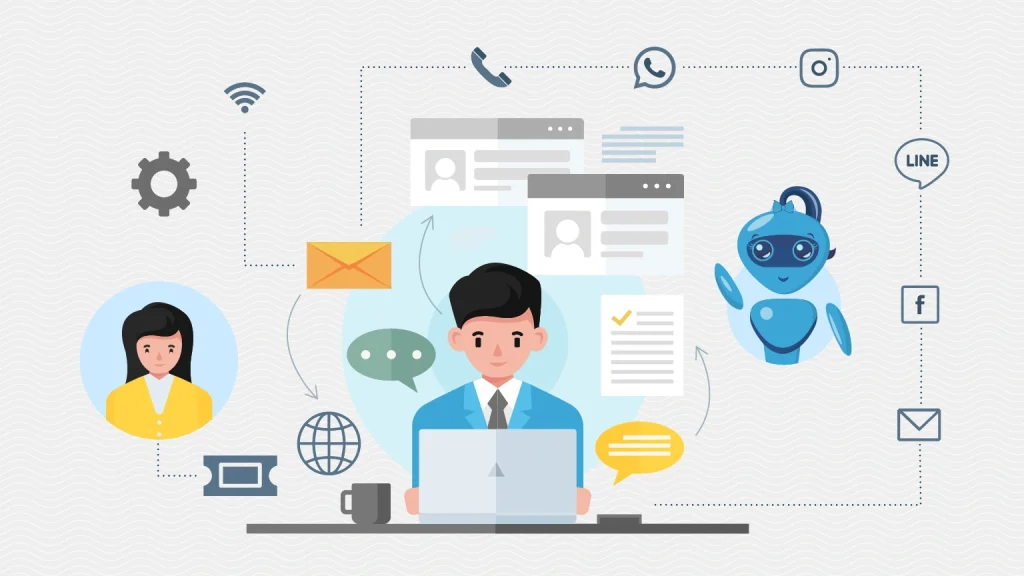
Modern helpdesk solutions bring all these interactions into a single unified dashboard, allowing support teams to:
- Maintain context across conversations
- Respond faster
- Deliver a seamless customer experience
For mid-size businesses, omnichannel capability is no longer optional—it’s a necessity.
3. AI and Automation Capabilities
AI is transforming how helpdesk software solutions operate. The right solution should offer:
- AI chatbots for handling common queries
- Automated ticket routing
- Suggested responses for agents
- Workflow automation for repetitive tasks
These features significantly reduce manual workload and enable smaller teams to handle larger volumes of requests efficiently.
4. Customization and Workflow Flexibility
Every business has unique processes. The best helpdesk software solutions provide:
Look for tools that allow:
- Custom workflows
- Rule-based automation
- Escalation triggers
- Department-specific ticket handling
This flexibility ensures that your support operations align perfectly with your business needs, improving both speed and consistency. You can explore advanced Helpdesk Features to better understand how customization enhances efficiency.
5. Self-Service and Knowledge Base
In 2026, customers prefer solving issues independently. Strong helpdesk software solutions should include:
A strong helpdesk should include:
- A searchable knowledge base
- FAQs and help articles
- Self-service portals
This reduces the number of incoming tickets and allows your support team to focus on more complex issues, improving overall efficiency.
6. Seamless Integrations
Your helpdesk should integrate smoothly with your existing tools, such as:
- CRM systems
- Communication platforms (Slack, Teams)
- Billing or subscription tools
Integrations provide agents with full customer context in one place, reducing the need to switch between systems and speeding up resolution times.
7. Advanced Reporting and Analytics
Data-driven decision-making is essential. Leading helpdesk software solutions provide:
Look for features like:
- Ticket volume and trends
- Resolution time tracking
- Customer satisfaction (CSAT) metrics
- Agent performance reports
These insights help identify bottlenecks and continuously improve service quality.
8. Scalability and Cost Efficiency
Mid-size businesses need software that can grow with them—without becoming overly complex or expensive.
The ideal helpdesk solution should:
- Support increasing ticket volumes
- Offer flexible pricing plans
- Scale users and features easily
This ensures long-term value without frequent platform changes.
9. User-Friendly Interface
Ease of use is often overlooked but highly important.
A clean and intuitive interface ensures:
- Faster onboarding
- Higher team adoption
- Improved productivity
If your team struggles to use the software, even the most advanced features won’t deliver results.
10. Security and Compliance
With increasing concerns around data privacy, security is non-negotiable.
Ensure your helpdesk includes:
- Data encryption
- Role-based access controls
- Audit logs
- Compliance with relevant regulations
This is especially important for businesses handling sensitive customer information.
Conclusion
For mid-size businesses in 2026, helpdesk software solutions are no longer just support tools—they are strategic assets.
The right solution should combine:
- Strong ticketing and omnichannel support
- AI-driven automation
- Custom workflows and integrations
- Scalability and ease of use
By choosing wisely, businesses can enhance customer experience, improve team efficiency, and support long-term growth—all without significantly increasing operational costs.
In a competitive landscape, the right helpdesk software doesn’t just solve problems—it creates better customer relationships and drives business success.
FAQs
Helpdesk software solutions are tools that help businesses manage customer support through ticketing systems, automation, and multi-channel communication.
They improve efficiency, streamline support operations, and enhance customer experience while supporting business growth.
Key features include ticket management, automation, AI capabilities, integrations, reporting, and self-service options.
AI automates repetitive tasks, categorizes tickets, and provides faster responses, improving overall support efficiency.
Yes, modern helpdesk software solutions are designed to scale with business growth and increasing support demands.